
One of the easiest ways I make an outfit look more flattering is by showing at least one of these three areas: my collarbone, wrists, or ankles. I never completely cover all three at the same time. When everything is fully covered — high neckline, long sleeves, full-length pants — it can make a petite frame look overwhelmed by fabric.
Even small adjustments make a big difference. Slightly unbuttoning a shirt to show a bit of collarbone elongates the neck. Rolling sleeves to expose the wrists instantly lightens the outfit. Shorter length pants that show a touch of ankle can also help. It’s not about showing skin — it’s about creating visual lightness.
How to shorten your sleeves

Sleeves are almost always too long on me, especially with sweaters and coats. Instead of ignoring it, I fix it. One simple trick I use is small clothing pins (you can easily find them on Amazon). I roll the sleeve inward to the length I want, then secure it from the inside so it stays in place.
This works beautifully for structured pieces like blazers and coats, and even chunky knits. When sleeves are the right length, everything looks more intentional and tailored. And tailoring isn’t always necessary — sometimes it’s just about small adjustments.
Avoid dividing your body in the middle
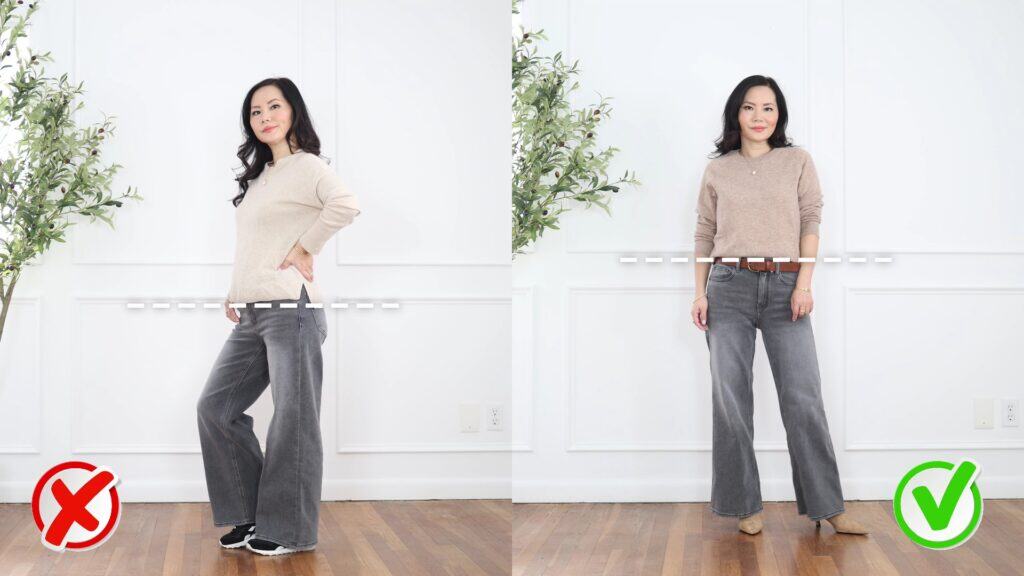
Sweater XS | Jeans 27 | Booties
If a top hits right at the widest part of your hips, it visually cuts your body in half. On a shorter frame, that 50/50 division makes you look shorter. I’m very mindful of where my tops end, because proportions matter more than trends.
If something hits at an awkward spot, I either shorten the top, tuck it slightly, or choose a longer bottom. Even changing shoes — like switching from flats to a small heel — can help maintain a longer vertical line. The goal is to avoid that harsh horizontal break.
Rule of thirds

Coat | Tee XS | Pants S | Shoes
I follow the rule of thirds constantly when putting outfits together. Instead of splitting the body evenly in half, the most flattering proportion is usually when the top takes up about one-third and the bottom takes up two-thirds.
This creates a more elongated silhouette automatically. High-waisted pants with a shorter top, for example, almost always look better than a mid-rise pant with a long top. It’s a subtle shift, but visually it makes a big difference.
Reverse rule of thirds
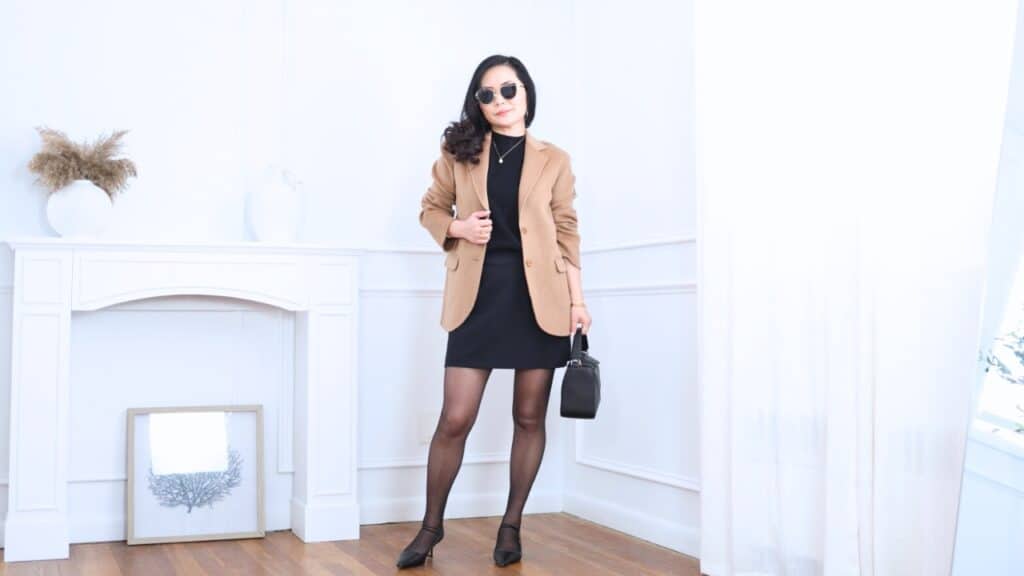
Blazer XS | Top XS | Skort S | Bag | Shoes

Sweater XS | Skirt S | Bag | Shoes
The reverse rule of thirds works when your top layer is longer. If I’m wearing a regular-length jacket that covers more of my torso — closer to two-thirds — then I balance it with a shorter bottom.
For example, a thigh-length jacket paired with a shorter skirt keeps the proportions interesting and intentional. If both pieces are long, it can look heavy and drag the body down. It’s all about balance.
How to make your sweaters shorter

Sweater XS | Skinny Belt
Sometimes sweaters are just too long — especially on petites. Instead of letting them overwhelm me, I adjust them. One easy method is the simple under-tuck. But when the knit is thicker, I use a skinny belt that’s close to the sweater’s color.
I put the belt on first, then gently blouse the sweater over it so the belt disappears underneath. This instantly creates shape and shortens the torso visually without adding bulk. It’s one of my favorite tricks for fall and winter.
Wear nude shoes

Top XS | Pants 2P | Bag | Shoes

Jacket S | Tee XS | Pants S | Shoes

Sweater XS | Shirt XS | Jeans 27 | Bag | Loafers
Nude shoes are something I consider essential in my wardrobe. When the shoe blends with your skin tone, your legs visually continue downward without interruption.
This is especially helpful when I’m not wearing heels. Nude flats or low heels still give that elongating effect. It’s such a simple switch, but it makes casual outfits look much more polished and lengthened.
Avoid bunching up

Coat | Tee XS | Pants S | Shoes
Pant length is something I’m very particular about. When fabric bunches on top of your shoes, it creates a horizontal break that visually cuts the legs off.
I either hem my pants properly or choose the right shoe height so the length works. I also love lower-vamp shoes because they show more of the top of the foot, which makes the leg look longer. These small details matter.
Petite size versus regular size

Jacket XS | Top XS | Jeans 27 | Bag | Shoes

Coat XS | Vest XS | Jeans 27 | Bag | Shoes
Petite sizing is often the better choice for jackets, coats, long sleeves, and button-down shirts. The proportions are usually adjusted correctly for shorter torsos and arms.
But I don’t blindly choose petite every time. For flare jeans, for example, I actually prefer regular sizing with a longer inseam. If flares are too short, they create a wide horizontal line at the bottom, which makes the legs look cut off. In that case, longer is better.
Go single-breasted

Coat XS | Pants S | Bag | Boots
When it comes to coats and blazers, I almost always gravitate toward single-breasted styles. That single row of buttons creates one strong vertical line, which naturally draws the eye up and down.
Double-breasted styles can sometimes look boxier or wider on a petite frame. They’re not impossible to wear, but they require more careful styling. If you want an easy, safe choice, single-breasted is usually more elongating.
Carry your bag higher

Sweater Tank XS | Jeans 27 | Bag | Shoes
One mistake I see often is wearing a crossbody bag too low. When the bag hangs too far down, it drags the eye downward and throws off your proportions.
I make sure my bag doesn’t sit lower than my crotch area. If the strap is too long, I adjust it — or even take it to a cobbler to shorten a chain strap. It’s a small tweak, but it keeps the outfit looking balanced.

Leave a Reply